Concrete Driveway Building in Lowell MA - a slab that holds up to cars and winter
Cracked, sinking or puddling driveway? We build a new concrete slab on a packed base, sized and mixed for your cars and our winters.
A concrete driveway starts below the surface
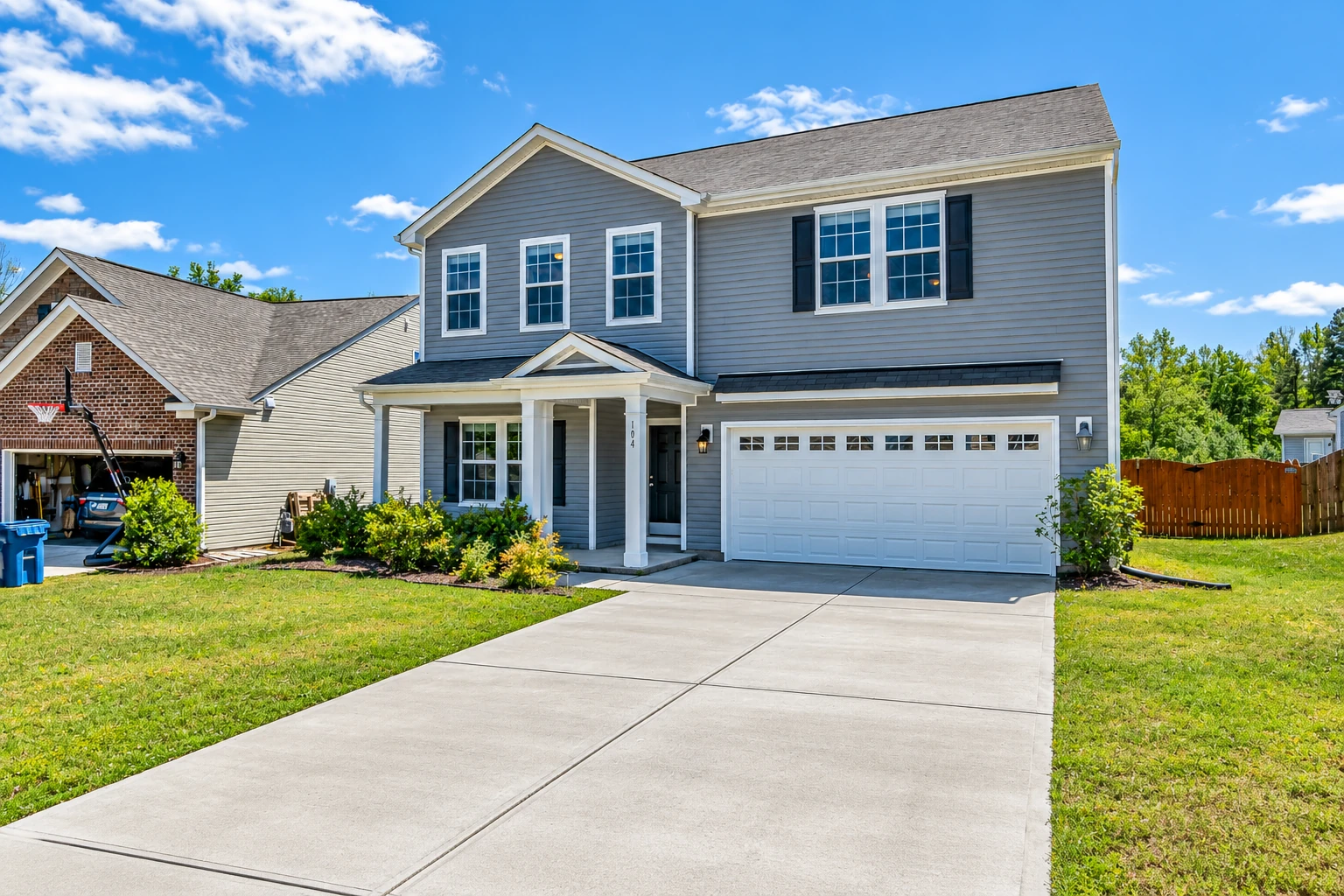
Most driveway calls in Lowell start with a slab that's cracked, sunk at one edge or holding a puddle by the garage. A new concrete driveway is a slab at least 4 inches thick that you drive on once it cures, the slow hardening that goes on after the pour. The old trouble is usually underneath, a base raked flat instead of dug out and packed, so that's where we start.
The price moves with the size, the thickness you choose, how much digging the base needs and whether the work reaches the street, and the schedule turns on weather, the city permit and curing. The estimate spells all of it out, and if a concrete patio or stamped concrete is on your list too, we can plan them together.
- Base dug out and packed, not raked
- Slab pitched so water runs away
- Thickness picked for what you park
- A mix made to handle winter
How thick your driveway should be
Thickness decides how much weight the driveway carries for good, and you can't add it later, so we settle it with you before we order concrete.
The minimum
- When it suits
- Cars only, on a short drive over firm, well-drained ground.
- What it takes
- A carefully packed base, since a thinner slab leans on it more.
A step thicker
- When it suits
- Most households, with an SUV, a pickup or a second car.
- What it takes
- A little more concrete and a slightly deeper dig-out.
Heavy duty
- When it suits
- Work trucks, trailers, a boat or regular heavy deliveries pulling in.
- What it takes
- A thicker slab, often with rebar, steel bars that help hold it together.
How we build your driveway
Call or write
You call (978) 441-3345 or send the form, and we get back to you to set a time to see the driveway.
I look it over
I come out myself, measure, check where the water runs and what's under the old slab, then send a written estimate showing what's included.
Permit and timing
We apply for the permit as the contractor. Lowell issues them for work touching the street only April 1 to November 15, so we plan inside those dates.
Digging out the base
Our crew tears out the old driveway, then digs down and packs the subgrade, the ground the slab rests on, so the new concrete has solid footing.
Pour and walk-through
Our finishers pour early, out of the midday heat, add a broom finish for grip and cut control joints, grooves that give cracks a straight path. Then we clean up and walk it with you.
What to settle before we pour
These choices set both the price and how long the driveway lasts, so I'd rather talk them through at the estimate than after the concrete is in.
Don't skimp on the base
If the budget's tight, cut back on the finish, not the base, because nobody sees the base on day one but it decides whether the slab stays flat.
Where the water runs
Where a driveway falls toward the house or garage, rain heads straight for the foundation, so we check the grade and pitch the new slab away from it.
Widening a Lowell driveway
Lowell limits curb cuts, the opening at the street, to 15 feet. In the TSF zone, an existing driveway can be widened if the addition stays 3 feet from the property lines.
Parking while it's out
You'll need another place to park from tear-out until the slab has cured enough to drive on, so it helps to line up a neighbor's driveway or another spot early.
What good driveway work looks like
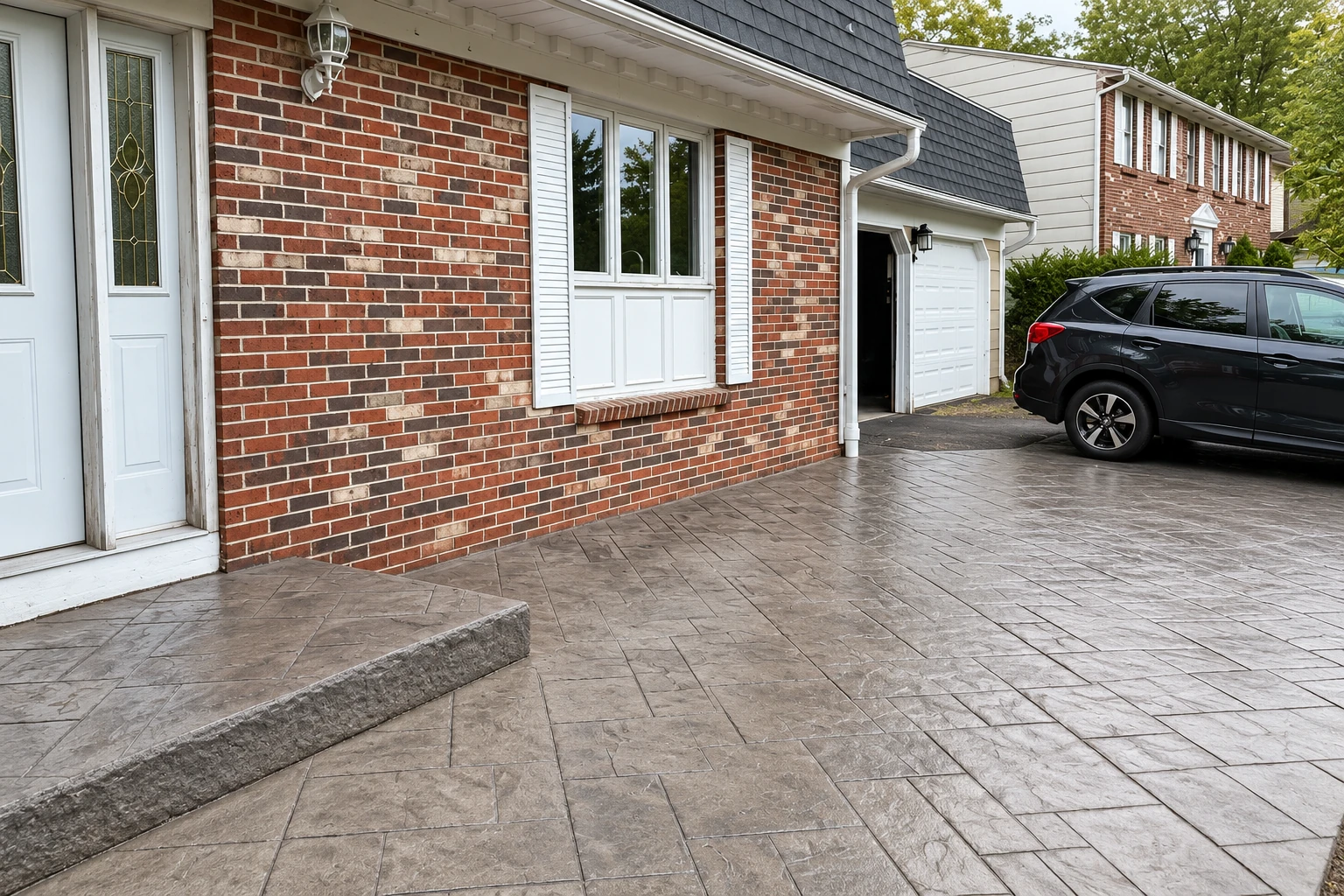
Look for straight, clean joints, crisp square edges, an even broom texture and no puddles sitting on the surface. Open any photo for a closer look.
Tell us about your driveway
Send the rough size, whether it reaches the street and your zone if you know it. We reply within one business day to set up a free, no-obligation estimate.
To talk now, call
(978) 441-3345Questions about a new driveway
Another question? Call (978) 441-3345
How much does a concrete driveway cost, and does a thicker slab cost more?
An installed concrete driveway in Massachusetts usually costs about $9 to $19 per square foot, and a thicker slab does cost more. Going from 4 to 5 inches adds roughly 20% to the concrete cost but makes the driveway nearly 50% stronger under load. Your written estimate gives your own figure.
Do I need a permit to repave my driveway in Lowell?
Yes. The City of Lowell issues a Driveway Permit for paving driveways, and it applies even when you're repaving an existing parking area. The city puts securing it on the paving contractor, so we apply for it as part of the job. We're licensed and fully insured.
When can I drive on my new concrete driveway?
Give it at least a week of curing before anyone drives on it, because the slab is still gaining strength after it looks hard. Plan to park somewhere else that first week, and ask us at the walk-through if you're not sure it's ready.
Can I salt my new concrete driveway in its first winter?
It's better not to. One concrete maker's guide advises skipping deicing salts the first winter because they speed up scaling, the flaking of the top surface, and sand gives you traction without that damage. Our work is backed by our satisfaction guarantee.
What concrete mix holds up to Massachusetts winters on a driveway?
A mix made for freezing weather. One concrete trade association advises that concrete facing winter have a minimum strength, a limit on water in the mix and entrained air, tiny bubbles that give freezing water room. We go over the mix with you before we order, and you're welcome to ask what's going in.
Will a new concrete driveway crack like my old one did?
It can, because all concrete shrinks and moves, so the goal is controlling where cracks go and what's underneath. The control joints we cut give cracks a straight line to follow, and a dug-out, packed base gives the slab firm support, where a raked one tends to settle with the dirt and break it up.